Introduction
Lighting can change the character of a room without requiring a major renovation. A ceiling light that provides bright general illumination can make a kitchen easier to work in, while softer or more colorful lighting can create a different atmosphere for relaxing, entertaining, or watching a movie.
Recessed lighting is particularly popular for this reason. Because the light source sits within the ceiling rather than extending significantly into the room, recessed fixtures can provide illumination while maintaining a relatively clean visual appearance.
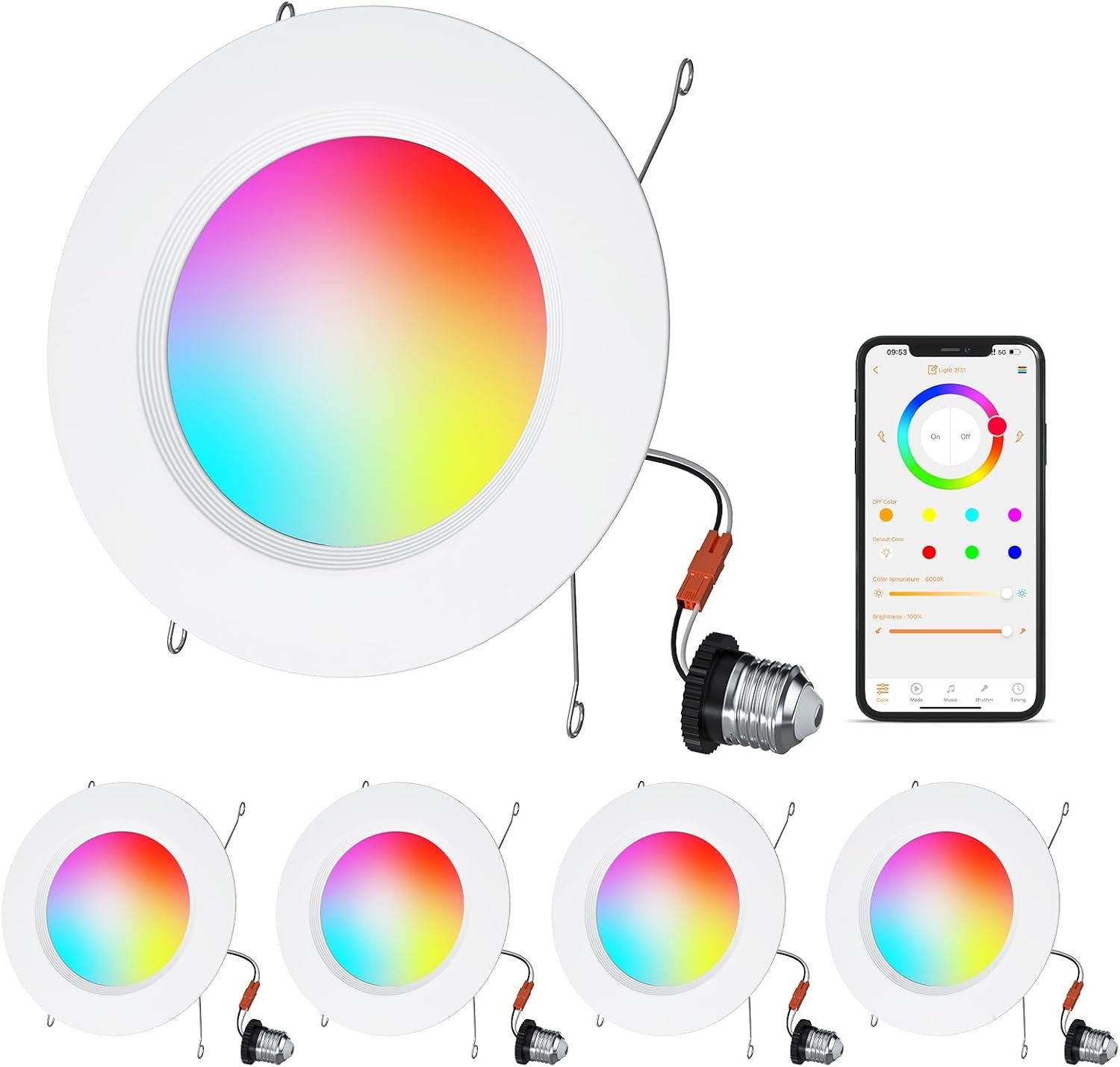
The 5/6 Inch 13W Recessed Lighting Color Changing Can Light is designed around this type of installation. The product listing associated with the HYDONG model describes a four-pack of recessed LED downlights with a white finish, color-changing capabilities, and compatibility with common recessed-lighting installations. The listing identifies the lights as 5/6-inch recessed lighting and describes multiple lighting colors and dimming functionality.
A color-changing recessed light can serve a different purpose from a conventional fixed-color ceiling fixture. Instead of committing a room to one color temperature or color, the user can adjust the lighting according to the activity or preferred atmosphere.
This can make the same room feel different throughout the day. A brighter white setting may be appropriate when preparing food or working, while a warmer setting can be more comfortable for an evening environment. Color modes can also be used for decorative purposes.
However, smart or color-changing lighting should be approached as part of a complete lighting system rather than as a replacement for every other type of light. Room size, ceiling construction, existing electrical connections, dimmer compatibility, installation depth, and local electrical requirements all matter.
This guide takes an informational look at the 5/6 Inch 13W Color Changing Recessed Lighting four-pack, explaining how recessed LED lights work, what the color-changing feature can offer, how they can be used around the home, and what to consider before installation.
What Is 5/6 Inch Recessed Lighting?
Recessed lighting is a type of ceiling fixture in which the light source is installed within an opening in the ceiling.
Instead of hanging down from the ceiling like a pendant or chandelier, a recessed light sits relatively flush with the ceiling surface.
This creates a streamlined appearance and can help distribute light across a room without introducing a large visible fixture.
The “5/6-inch” terminology used for recessed lights generally refers to the compatible recessed housing or aperture category rather than necessarily describing the diameter of the visible trim itself.
This is an important distinction when planning an installation.
Existing recessed housings can differ in size, shape, electrical configuration, and mounting method. Before purchasing replacement downlights, homeowners should compare the product’s installation requirements with their existing ceiling opening and housing.
Key Features
13-Watt LED Lighting
The product is identified as a 13W recessed LED light.
Wattage describes electrical power consumption, not brightness by itself.
LED technology can produce substantial illumination while using relatively little electrical power compared with many older lighting technologies.
However, brightness should be evaluated using lumens rather than wattage alone.
When comparing different recessed lights, users should consider:
- Lumens
- Color temperature
- Beam distribution
- Ceiling height
- Room dimensions
- Number of fixtures
- Surface colors
- Intended activity
A 13-watt rating therefore provides information about power consumption, but it does not independently determine how bright a room will appear.
Four-Pack Configuration
The product is offered as a four-pack.
A multiple-light configuration can be useful when installing or updating several recessed fixtures within the same room.
Using matching fixtures can create visual consistency across the ceiling.
For example, four recessed lights may be used in:
- A small kitchen
- Bedroom
- Hallway
- Home office
- Living room
- Basement
- Dining area
The appropriate number of lights depends on the size and layout of the room.
More fixtures are not automatically better. Too many lights can produce excessive illumination or create unwanted glare.
Color-Changing Lighting
One of the defining features is color-changing functionality.
Traditional recessed lights typically provide one fixed color temperature.
A color-changing fixture provides more flexibility.
Depending on the supported modes and controls, users can select different lighting appearances for different situations.
Common categories include:
- Warm white
- Neutral white
- Cool white
- Decorative colors
Warm lighting can create a relaxed atmosphere, while cooler white light can feel more energetic and task-oriented.
Color modes can be useful for decorative purposes, special occasions, entertainment spaces, or accent lighting.
White Housing and Trim
The white finish is designed to blend into many conventional ceiling surfaces.
White recessed trims are commonly used because they can appear relatively unobtrusive when installed in a white ceiling.
This allows the lighting to become part of the room rather than becoming a major visual feature.
For ceilings with another color or texture, the contrast may be more noticeable.
Understanding Color Temperature
Color temperature is one of the most important concepts when selecting LED lighting.
It is normally expressed in Kelvin, abbreviated as K.
Lower Kelvin values generally appear warmer, with more yellow or amber tones.
Higher values generally appear cooler and more blue-white.
A simplified example:
| Color Temperature | General Appearance | Common Use |
|---|---|---|
| Warm White | Soft and yellowish | Bedrooms, living rooms |
| Neutral White | Balanced white | Kitchens, offices |
| Cool White | Crisp and bright-looking | Workspaces, utility areas |
| Color Modes | Decorative colors | Entertainment and accents |
The exact appearance depends on the light’s design and surrounding surfaces.
Color-changing recessed lights can be useful because the preferred lighting environment does not have to remain fixed.
A kitchen used during the day for food preparation may benefit from a different lighting appearance in the evening.
How It Can Be Used
Kitchen Lighting
The kitchen is one of the most common applications for recessed lighting.
A ceiling-mounted downlight can provide general illumination over work areas.
Multiple fixtures can be positioned to distribute light across:
- Countertops
- Islands
- Sinks
- Cooking areas
- Walkways
- Dining spaces
Color adjustment can add flexibility.
A neutral or cooler white setting may be suitable for food preparation, cleaning, and other detailed tasks.
A warmer setting can create a more relaxed atmosphere during meals or evenings.
The positioning of recessed lights matters considerably. Lights installed too far from work surfaces can create shadows, while lights placed directly behind a person can cause the user’s body to block illumination.
Living Room
A living room often needs flexible lighting because it can serve several purposes.
The same room might be used for:
- Reading
- Watching television
- Conversations
- Entertaining guests
- Relaxing
- Playing games
Adjustable lighting can help accommodate these different activities.
A warmer light can create a calmer atmosphere, while a brighter white setting can provide more general illumination when the room is being actively used.
Color modes can also provide decorative lighting for gatherings or entertainment.
Bedroom
Bedrooms generally benefit from lighting that can transition from functional to relaxing.
Recessed fixtures can provide general ceiling illumination without taking up wall or floor space.
During the morning, a brighter setting can make the room easier to navigate and prepare in.
Later in the evening, warmer lighting can create a softer visual environment.
However, recessed lighting should not necessarily be the only light source in a bedroom. Bedside lamps and other localized fixtures can provide more comfortable light for reading or other activities.
Home Office
A home office requires careful lighting because screen glare and reflections can become uncomfortable.
Recessed lights can provide general overhead illumination, while a desk lamp can provide localized task lighting.
Color-changing functionality can make it possible to select a lighting appearance that works better for different activities.
When using computer screens, users should pay attention to reflections on the display.
The ideal location of recessed lights depends on the desk position, ceiling height, and direction of the user’s view.
Basement
Basements often have limited natural light.
Recessed fixtures can provide broad ceiling illumination while maintaining ceiling clearance.
A four-pack can be useful for distributing multiple light sources across a basement area.
Color-changing functionality can also make a basement more flexible.
For example, a brighter white setting can be used for cleaning or working, while a warmer or decorative setting can be used in a recreational area.
Hallways
Hallways can benefit from recessed lighting because the fixtures do not protrude significantly from the ceiling.
Multiple fixtures can provide consistent illumination along a corridor.
The spacing should be planned according to the ceiling height and desired light distribution.
Installing fixtures too close together can create unnecessary brightness, while excessive spacing can create dark areas.
Dining Areas
Dining rooms often benefit from a combination of general and decorative lighting.
Recessed lights can provide overall illumination while a pendant or chandelier serves as the visual centerpiece.
Color-changing recessed fixtures can provide background lighting that changes with the occasion.
For a formal dinner, warmer light may create a softer environment.
For cleaning or everyday activities, a brighter white setting can be more practical.
Entertainment Rooms
Color-changing lighting can be particularly useful in entertainment spaces.
A media room, gaming room, or recreational area can use different lighting colors to create a more customized environment.
Color modes can also complement other decorative lighting.
The goal should generally be to create atmosphere without producing distracting reflections on television or monitor screens.
Recessed Lighting and Room Design
Lighting affects more than visibility.
It also influences how colors, textures, furniture, and architectural details appear.
A warmer light can make wood tones and warm-colored walls appear more inviting.
Cooler lighting can emphasize white surfaces and create a cleaner visual appearance.
Color-changing modes can introduce a decorative element without requiring separate lamps.
This flexibility can be useful when one room has multiple functions.
However, lighting should complement the room rather than overwhelm it.
A small room with too many bright fixtures can feel uncomfortable, while a large room with too few lights may contain dark areas.
Installing Recessed LED Lights
Check the Existing Housing
Before replacing existing recessed lights, identify the type of housing already installed.
Important details can include:
- Housing diameter
- Housing depth
- Connector type
- Voltage
- Existing trim
- Mounting clips
- IC rating requirements
- Ceiling material
A fixture designed for one type of installation may not be suitable for another.
Turn Off Power
Electrical work should always begin with appropriate safety precautions.
Turn off the relevant circuit at the electrical panel before working on an existing fixture.
Do not rely solely on the wall switch.
A qualified electrician can verify that the circuit is de-energized and perform installation when the wiring or housing is unfamiliar.
Follow the Product Instructions
Recessed lights can have different installation procedures.
The correct method depends on the specific model and existing housing.
Follow the manufacturer’s installation instructions rather than assuming that every 5/6-inch recessed light installs in exactly the same way.
Check Local Electrical Requirements
Electrical codes differ by location.
Some installations may have requirements related to insulation contact, junction boxes, grounding, wiring, fire protection, or ceiling construction.
When there is uncertainty, professional electrical advice is appropriate.
Important Things to Consider
Existing Ceiling Opening
The first practical question is whether the light fits the existing opening.
The term “5/6-inch” can refer to a category of recessed housing rather than meaning that every opening measuring exactly that amount will automatically accept the fixture.
Measure the existing installation carefully.
Dimmer Compatibility
If the lights are intended to be used with a wall dimmer, verify compatibility between the light and the dimmer.
Not every LED fixture works correctly with every dimmer.
An incompatible combination can cause:
- Flickering
- Buzzing
- Limited dimming range
- Unexpected shutdown
- Uneven brightness
The manufacturer’s compatibility information should be checked before installation.
Color Control Method
Color-changing lights can use different control methods depending on the model.
Some use a wall switch, remote control, app, or other control system.
Before installation, users should understand how the particular model changes colors and modes.
This is especially important when several fixtures are installed together.
If all four lights are intended to operate together, the control system should be configured appropriately.
Brightness and Lumens
Wattage alone does not tell users how much light a fixture produces.
When comparing recessed lighting, look for the lumen rating.
A fixture with more watts is not automatically brighter than another fixture with fewer watts.
LED efficiency varies by design.
Ceiling Height
Ceiling height affects how light spreads across a room.
A fixture installed in a low ceiling may illuminate a smaller area effectively than the same fixture installed in a higher ceiling.
Spacing should therefore be based on the actual room rather than a fixed formula.
Glare
Recessed lights can produce glare if positioned incorrectly or if the light source is too intense for the environment.
Glare can become particularly noticeable around:
- Television screens
- Computer monitors
- Glossy countertops
- Mirrors
- Polished surfaces
Planning fixture locations before installation can reduce these problems.
Comparison of General Lighting Categories
| Lighting Category | Installation | Adjustability | Typical Use |
|---|---|---|---|
| Fixed Recessed LED | Ceiling | Limited | General illumination |
| Color-Changing Recessed LED | Ceiling | High | General and decorative lighting |
| Pendant Light | Ceiling | Varies | Dining and focal areas |
| Track Lighting | Ceiling/Wall | High | Accent and directional lighting |
| Floor Lamp | Portable | Moderate | Localized room lighting |
| Table Lamp | Portable | Moderate | Task and ambient lighting |
| Smart Bulb | Existing fixture | High | Flexible connected lighting |
The 5/6-inch color-changing recessed format occupies the space between conventional ceiling illumination and decorative smart lighting.
It retains the clean appearance of recessed fixtures while providing more flexibility than a fixed-color downlight.
Color-Changing Recessed Lighting vs. Smart Bulbs
Smart bulbs can also provide adjustable colors and brightness.
However, they require a compatible bulb socket or fixture.
A recessed LED fixture can offer a more integrated ceiling appearance.
The choice depends on the existing installation.
If a home already has recessed housings, a compatible retrofit downlight can be a practical approach.
If the home uses conventional lamps and ceiling sockets, smart bulbs may be easier to introduce without changing the fixture.
Using Multiple Recessed Lights Together
Installing several matching fixtures can create a more consistent lighting environment.
With a four-pack, users may place the lights in a grid or distribute them according to the room’s architecture.
For example, a rectangular room could use two rows of two lights.
However, room dimensions vary.
A kitchen island, furniture arrangement, or architectural feature may require a different pattern.
Before drilling or cutting openings, mark the intended locations and consider where shadows will fall.
Energy Considerations
LED lighting is generally associated with lower energy consumption than traditional incandescent lighting for comparable illumination.
However, actual energy consumption depends on the number of fixtures and how long they are operated.
Four 13-watt fixtures operating simultaneously would consume more electricity than one fixture.
For that reason, zoning can be useful.
If the electrical system allows separate switches or controls for different groups of lights, users can illuminate only the area they are currently using.
Color-changing functionality may also allow users to adapt the atmosphere without installing additional decorative fixtures.
Maintenance
LED recessed fixtures generally require less routine maintenance than traditional bulbs because there is no conventional filament to replace.
However, the visible trim can accumulate dust.
Cleaning should be performed with the power turned off and using methods appropriate for the fixture’s materials.
Do not spray cleaning products directly into electrical components.
If a fixture begins flickering, overheating, producing unusual noise, or behaving unexpectedly, investigate the cause rather than continuing to use it without checking the installation.
Bathroom and Moisture-Prone Areas
Bathrooms require additional consideration.
Not every recessed light is rated for wet or damp locations.
If the light is being installed in a bathroom, users should verify the fixture’s applicable location rating and compare it with local electrical requirements.
The fact that an LED light is installed in a ceiling does not automatically make it suitable for areas exposed to moisture.
Placement near showers and bathtubs can have additional electrical safety requirements.
When in doubt, consult a qualified electrician.
Outdoor Applications
The product is designed as recessed indoor-style lighting unless its specifications explicitly state otherwise.
It should not automatically be installed outdoors or in locations exposed to rain.
Outdoor lighting requires suitable environmental protection and electrical ratings.
If outdoor recessed lighting is needed, choose a fixture specifically designed for that environment.
Frequently Asked Questions
What size are these recessed lights?
The product is marketed as 5/6-inch recessed lighting. This terminology generally refers to compatibility with a particular recessed-light housing category. The existing ceiling opening should still be measured before installation.
How many lights are included?
The product is sold as a four-pack.
This can be useful when updating multiple recessed fixtures in one room or creating a coordinated lighting arrangement.
What is the power rating?
Each light is identified as a 13-watt LED fixture.
Wattage describes electrical consumption rather than directly measuring brightness.
Can the color be changed?
Yes. The product is designed with color-changing functionality, allowing users to select different lighting appearances depending on the supported control system and available modes.
Can the lights be dimmed?
The product listing identifies dimming functionality. Users should verify the applicable dimmer and control compatibility before connecting the lights to an existing wall dimmer.
Are these smart lights?
Color-changing does not necessarily mean that a light is Wi-Fi or app-controlled.
The exact control method should be confirmed from the product instructions and listing. Users should not assume that every color-changing recessed fixture supports smartphone or voice control.
Are these lights suitable for a kitchen?
Recessed lighting can be very useful in kitchens.
These fixtures can provide overhead illumination for countertops, islands, walkways, and general kitchen areas when positioned appropriately.
Can they be used in a bedroom?
Yes. Recessed lighting can provide general bedroom illumination, while warmer settings can be used to create a softer atmosphere when appropriate.
Can they be installed in a living room?
Yes. Recessed lights are commonly used for living-room general illumination.
Color-changing functionality can also provide additional flexibility for entertainment or decorative lighting.
Can they be used in a basement?
They can be suitable for basement applications if the installation environment and electrical requirements are compatible.
Basement ceiling construction, insulation, moisture, and existing electrical housing should be considered before installation.
Do recessed lights need a housing?
The answer depends on the specific fixture design.
Some recessed LEDs are designed to retrofit into existing housings, while others are complete new-construction or remodel fixtures.
Users should follow the installation instructions for this particular product.
Can these lights replace existing recessed lights?
They may be suitable for certain existing recessed installations if the housing, opening, connectors, and electrical specifications match.
Compatibility should be confirmed before removing the existing fixtures.
What does 13W mean?
13W refers to the electrical power consumption of the light.
It does not directly tell you how bright the fixture will be. Lumens are a better measurement for comparing light output.
Are LED recessed lights energy efficient?
LED technology generally provides more illumination per watt than traditional incandescent lighting.
Actual energy savings depend on the fixture, operating time, number of lights, and the lighting technology being replaced.
Do color-changing lights consume more electricity?
Power consumption depends on the lighting mode and electronics in the fixture.
The maximum power rating provides a useful reference, but actual consumption can vary depending on the selected setting.
Can the four lights be controlled together?
That depends on the control system and installation configuration.
When installing multiple fixtures, users should follow the manufacturer’s instructions to ensure the lights operate as intended.
Do the lights remember the last color setting?
Memory behavior varies between lighting systems.
Users should consult the specific product documentation rather than assuming that a particular color or brightness level will always be retained after power is switched off.
Can they be installed with an existing dimmer?
Only if the light and dimmer are compatible.
LED lights can behave unpredictably with incompatible dimmers, including flickering or limited dimming.
Check the manufacturer’s compatibility information before installation.
Are they suitable for bathrooms?
Suitability depends on the fixture’s location rating and the specific bathroom installation.
The user should verify whether the light is rated for damp or wet locations and follow applicable electrical requirements.
Are they waterproof?
Users should not assume that a recessed light is waterproof unless the manufacturer specifically provides an appropriate rating.
Moisture-prone installations require fixtures designed for the environment.
Can these lights be installed outdoors?
Not unless the product is specifically rated for outdoor use.
Outdoor recessed lighting requires appropriate weather and electrical protection.
Can I install recessed lights myself?
Installation difficulty depends on the existing wiring and ceiling construction.
Anyone unfamiliar with residential electrical work should consider using a qualified electrician.
Always turn off power at the circuit breaker and follow applicable electrical requirements.
How should recessed light locations be planned?
Consider the room’s dimensions, ceiling height, furniture arrangement, task areas, and potential shadows.
It is often helpful to mark fixture locations before cutting into the ceiling.
Can recessed lighting replace every other light in a room?
Not necessarily.
A well-designed lighting system often combines general illumination with task and accent lighting.
For example, a kitchen may use recessed ceiling lights together with under-cabinet lighting.
How should the fixtures be cleaned?
Turn off the power and allow the fixture to cool before cleaning.
Use a soft, appropriate cloth and avoid introducing moisture into electrical components.
Follow the manufacturer’s care instructions.
Conclusion
The 5/6 Inch 13W Recessed Lighting Color Changing Can Light four-pack is designed for people looking to combine the clean appearance of recessed ceiling lighting with the flexibility of adjustable lighting colors.
Its 13-watt LED configuration provides a relatively compact lighting solution, while the four-pack format can make it practical for updating several fixtures within the same room. The color-changing feature adds another layer of flexibility, allowing a room’s lighting environment to be adjusted according to the activity, time of day, or desired atmosphere.
Recessed lighting can be particularly useful in kitchens, living rooms, bedrooms, home offices, basements, hallways, dining areas, and entertainment spaces. The best results depend heavily on fixture placement, ceiling height, room dimensions, and the balance between general, task, and accent lighting.
There are also several technical considerations that should be addressed before installation. The existing ceiling opening and recessed housing need to be compatible, the electrical connection must be appropriate, and dimmer compatibility should be verified when applicable. Bathrooms and other moisture-prone locations require additional attention to electrical and environmental ratings.
The color-changing capability should also be viewed as a flexibility feature rather than a replacement for thoughtful lighting design. A room still needs appropriate brightness, sensible fixture spacing, and consideration of glare and shadows.
For homeowners planning to update several compatible recessed fixtures, a coordinated four-pack can provide a straightforward way to create a consistent ceiling-lighting arrangement while giving the room more control over its visual atmosphere.
As with any electrical installation, safety and compatibility should come before appearance. Measuring the existing installation, reading the manufacturer’s instructions, and obtaining professional assistance when necessary can help ensure that the lighting system is installed correctly.
Leave a Reply